powered by
Ticket Bar
Ticket Bar

Formation of startups and new companies
Commercial exploitation of science, technology, and novelty
System of laws, regulations, strategies, and funding priorities
Discovery and creation of new knowledge of the natural world
Application of new knowledge towards useful social ends
By: Amran Muhammad and Natalie Day
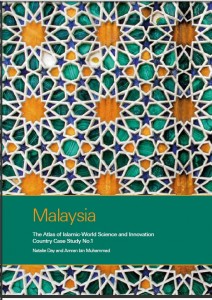
Royal Society recently released Malaysia Atlas Report
With all the extraordinary hype about phone hacking in the UK, you could be forgiven for missing the recent visit of the Malaysian Prime Minister Datuk Seri Tun Razak to the UK. Najib met with the UK Prime Minister, David Cameron, the Queen as well as captains of industry. His message: consider Malaysia as the place to do high-value, high-tech knowledge-based innovation. This might seem a fairly common theme amongst leaders of developing countries trying to shift their economies from a traditional manufacturing focus to a knowledge-based economy, but this ambition in Malaysia has deep roots and is one which warrants greater attention.
The story of Malaysia’s ambition in science, technology and innovation (STI) began in 1991, when the then Prime Minister Mahathir launched an ambitious plan, known as Wawasan 2020 or Vision 2020, to make Malaysia a knowledge-based economy by 2020. STI was identified as integral to its success. Mahathir was determined “to establish a scientific and progressive society, a society that is innovative and forward-looking, one that is not only a consumer of technology but also a contributor to the scientific and technological civilisation of the future”. Now, over 30 years later, Malaysia has made significant progress against this ambition, but there is still work to be done. Najib’s promotion of Malaysia’s credentials internationally are important, but so too is the need to consolidate and focus investment through all layers of the STI system to ensure success.
 By: Ziauddin Sardar
Lecture at the Royal Society, 2007
At the end of the tenth century, a brilliant scientist left his home town of Basra to pursue an ambitious project in Egypt. He’d noticed how, seasonally, the river Nile flooded large parts of the delta. But in winter water levels fell so low cultivation was almost impossible. What, he thought, if the surplus flood water could be stored and used when most needed? He devised a scheme - to regulate the Nile, so that the people could derive benefit at its ebb and flow.’ His plan required building a three-way embankment dam near Aswan. He sent the proposal to the Fatimid Caliph al-Hakim in Cairo. The Cal...
By: Ziauddin Sardar
Lecture at the Royal Society, 2007
At the end of the tenth century, a brilliant scientist left his home town of Basra to pursue an ambitious project in Egypt. He’d noticed how, seasonally, the river Nile flooded large parts of the delta. But in winter water levels fell so low cultivation was almost impossible. What, he thought, if the surplus flood water could be stored and used when most needed? He devised a scheme - to regulate the Nile, so that the people could derive benefit at its ebb and flow.’ His plan required building a three-way embankment dam near Aswan. He sent the proposal to the Fatimid Caliph al-Hakim in Cairo. The Cal... By: Pervez Hoodbhoy
Published in Physics Today (August, 2007)
“If Muslim societies are to develop technology instead of just using it, the ruthlessly competitive global marketplace will insist on not only high skill levels but also intense social work habits. The latter are not easily reconcilable with religious demands made on a fully observant Muslim’s time, energy, and mental concentration: The faithful must participate in five daily congregational prayers, endure a month of fasting that taxes the body, recite daily from the Qur’an, and more. Although such duties orient believers admirably well toward success in the life hereafter, they make worldly success...
By: Pervez Hoodbhoy
Published in Physics Today (August, 2007)
“If Muslim societies are to develop technology instead of just using it, the ruthlessly competitive global marketplace will insist on not only high skill levels but also intense social work habits. The latter are not easily reconcilable with religious demands made on a fully observant Muslim’s time, energy, and mental concentration: The faithful must participate in five daily congregational prayers, endure a month of fasting that taxes the body, recite daily from the Qur’an, and more. Although such duties orient believers admirably well toward success in the life hereafter, they make worldly success... By: Waleed Al-Shobakky
Published in The New Atlantis, Fall 2008
Oil executives are rarely assigned to establish universities. But when the unlikely call arrives, some hardly pause to ponder the unconventionality of the assignment. So, only five minutes into the meeting that brought him together with leading individuals from Carnegie Mellon University, Nadhmi Al-Nasr, vice president of Saudi Arabia’s state-owned oil company Aramco, did not mince his words: “It is perhaps unusual that an oil executive is starting a university. But given your experience in Qatar, would your university be willing to help us build a new research university in Saudi Arabia?”
I...
By: Waleed Al-Shobakky
Published in The New Atlantis, Fall 2008
Oil executives are rarely assigned to establish universities. But when the unlikely call arrives, some hardly pause to ponder the unconventionality of the assignment. So, only five minutes into the meeting that brought him together with leading individuals from Carnegie Mellon University, Nadhmi Al-Nasr, vice president of Saudi Arabia’s state-owned oil company Aramco, did not mince his words: “It is perhaps unusual that an oil executive is starting a university. But given your experience in Qatar, would your university be willing to help us build a new research university in Saudi Arabia?”
I... By: Dr. Athar Osama
Muslim-Science.Com talked with Dr. Mohammed H. A. Hassan, the outgoing Executive Director of The Academy of Sciences of the Developing World (TWAS). While Dr. Hassan hopes to continue to remain engaged with TWAS, his retirement is an end of an era for the institution created more than 25 years ago. Remembering those days, Dr. Hassan recalls his first encounter with Dr. Abdus Salam – one of the most prolific and inspirational scientist ever to have been produced by the Developing World – who had a formative influence on TWAS. As Hassan became a regular visitor at Salam’s International Center for Theoretical Physics (ICTP) in Trieste in Italy, he ...
By: Dr. Athar Osama
Muslim-Science.Com talked with Dr. Mohammed H. A. Hassan, the outgoing Executive Director of The Academy of Sciences of the Developing World (TWAS). While Dr. Hassan hopes to continue to remain engaged with TWAS, his retirement is an end of an era for the institution created more than 25 years ago. Remembering those days, Dr. Hassan recalls his first encounter with Dr. Abdus Salam – one of the most prolific and inspirational scientist ever to have been produced by the Developing World – who had a formative influence on TWAS. As Hassan became a regular visitor at Salam’s International Center for Theoretical Physics (ICTP) in Trieste in Italy, he ... By: Athar Osama
Published on SciDev.Net on 15 December 2011
Arab Spring revolutionaries turning to governance must adopt knowledge and innovation as barometers for progress, says Athar Osama.
As revolutions swept countries and shook governments across the Middle East and North Africa (MENA) region this year, they created opportunities for greater public voice in governance. Tunisia, for example, recently went through an election, and the Egyptian people are in the process of electing an assembly whose job is to write a new constitution.
And as revolutionaries turn to governance, they will have to address the socioeconomic and cultural challenges facing ten...
By: Athar Osama
Published on SciDev.Net on 15 December 2011
Arab Spring revolutionaries turning to governance must adopt knowledge and innovation as barometers for progress, says Athar Osama.
As revolutions swept countries and shook governments across the Middle East and North Africa (MENA) region this year, they created opportunities for greater public voice in governance. Tunisia, for example, recently went through an election, and the Egyptian people are in the process of electing an assembly whose job is to write a new constitution.
And as revolutionaries turn to governance, they will have to address the socioeconomic and cultural challenges facing ten... By: Frank Lehner
Published in Journal of Renewable and Sustainable Energy on 30 August 2011.
The idea of generating solar energy on a large scale in the sun-intensive countries of the Middle East and North Africa (MENA) to satisfy their own increasing energy demand and to export surplus energy to Europe as advocated in the DESERTEC concept1 has publicly received much attention in some countries, particularly in Germany, Morocco, Tunisia, and also substantial support from their governments. Besides the DESERTEC Foundation, an industrial consortium (Dii GmbH) was founded in 2009 which consists of major European and MENA companies to push this project further b...
By: Frank Lehner
Published in Journal of Renewable and Sustainable Energy on 30 August 2011.
The idea of generating solar energy on a large scale in the sun-intensive countries of the Middle East and North Africa (MENA) to satisfy their own increasing energy demand and to export surplus energy to Europe as advocated in the DESERTEC concept1 has publicly received much attention in some countries, particularly in Germany, Morocco, Tunisia, and also substantial support from their governments. Besides the DESERTEC Foundation, an industrial consortium (Dii GmbH) was founded in 2009 which consists of major European and MENA companies to push this project further b... By: Dr. Athar Osama
Muslim-Science.Com met with Tan Sri Dr. Omar Abdur Rahman, Mahathir’s Science Advisor for over a decade and half and, the “prime mover” behind Mahathir Mohammed’s vision of a Knowledge-driven Malaysia. A deeply humble man, Tan Sri Omar insists that Mahathir was a science policymaker par excellence in his own right and that he would hardly have needed a science advisor. However, he played a critical role in providing scientific credibility to Mahathir’s plans and helping the Prime Minister reach out to the scientific community to build support for his policies.
As Malaysia’s first and longest serving Science Advisor – a position t...
By: Dr. Athar Osama
Muslim-Science.Com met with Tan Sri Dr. Omar Abdur Rahman, Mahathir’s Science Advisor for over a decade and half and, the “prime mover” behind Mahathir Mohammed’s vision of a Knowledge-driven Malaysia. A deeply humble man, Tan Sri Omar insists that Mahathir was a science policymaker par excellence in his own right and that he would hardly have needed a science advisor. However, he played a critical role in providing scientific credibility to Mahathir’s plans and helping the Prime Minister reach out to the scientific community to build support for his policies.
As Malaysia’s first and longest serving Science Advisor – a position t...