Entrepreneurship

Formation of startups and new companies

Innovation

Commercial exploitation of science, technology, and novelty

Public Policy

System of laws, regulations, strategies, and funding priorities

Science

Discovery and creation of new knowledge of the natural world

Technology

Application of new knowledge towards useful social ends

Home » Archive by Category

New in Perspectives

Perspectives: Building bridges—Towards a new science partnership between Europe and MENA

October 5, 2011 - 11:05 am | No Comment
By: Frank Lehner

Published in Journal of Renewable and Sustainable Energy on 30 August 2011.

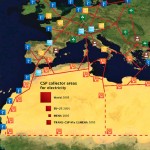
The idea of generating solar energy on a large scale in the sun-intensive countries of the Middle East and North Africa (MENA) to satisfy their own increasing energy demand and to export surplus energy to Europe as advocated in the DESERTEC concept1 has publicly received much attention in some countries, particularly in Germany, Morocco, Tunisia, and also substantial support from their governments. Besides the DESERTEC Foundation, an industrial consortium (Dii GmbH) was founded in 2009 which consists of major European and MENA companies to push this project further by working on legal, regulatory, technical, and economical frameworks to create viable market conditions for a large-scale roll-out. A systematic inter-connection around the Mediterranean basin and the deployment of 20 GW of renewable energy by 2020 is also at the core of the so-called Mediterranean Solar Plan,2 as part of a political roadmap based on a multi-governmental declaration by all 27 European Union Member States and 16 neighbouring states of the Union for the Mediterranean.
There are pressing challenges in MENA: The rapidly increasing energy (and water) demand in MENA will soon exceed the current supply capacities. It is expected that the electrical energy consumption in MENA will be more than triple by the year 2050 with respect to today.3 Water scarcity is already a serious problem in MENA, and population growth will further aggravate the situation. However, the potential of solar energy in MENA countries is immense with an annual average solar energy irradiance of 2400 kWh/m2. Every year up to 250 GWh of energy per square kilometre of desert could be harvested with solar power plants. This solar potential exceeds by far the potential of other renewable sources such as wind, biomass, hydro, or geothermal energy. Depending on the solar infrastructure, MENA would then be able to produce enough energy and co-generated water through seawater desalination for its own demands.

Recently in Perspectives:

Perspectives: Egypt needs science powered by people, not big projects
July 28, 2011 - 3:20 pm | No Comment
Perspectives: Egypt needs science powered by people, not big projects By: Austin Dacey Published on 21 July 2011 in SciDev.Net Egypt’s ‘science city’ will not build a science culture without its people empowered by academic experience abroad, argues Austin Dacey. There was a big day for ‘big science’ in Egypt last month. On 1 June the Egyptian cabinet approved a budget that increased spending on science by almost one third, from US$66.5 million to US$90.5 million, and pledged to create up to 50,000 new research jobs. The same day saw the cabinet approve the long-discussed Zewail City of Science and Technology, named after Ahmed Zewail, the Egyptian-born Nobel laureate, a professor at the California Ins...
Does Islam Stand Against Science?
June 30, 2011 - 4:14 pm | No Comment
Does Islam Stand Against Science? By: Steve Paulson Published in Chronicle of Higher Education on June 19, 2011 We may think the charged relationship between science and religion is mainly a problem for Christian fundamentalists, but modern science is also under fire in the Muslim world. Islamic creationist movements are gaining momentum, and growing numbers of Muslims now look to the Quran itself for revelations about science. Science in Muslim societies already lags far behind the scientific achievements of the West, but what adds a fair amount of contemporary angst is that Islamic civilization was once the unrivaled center of science and philosophy. What’s more, Islam’s “gol...
Perspectives: International Science Collaboration with the Middle East and North Africa
April 7, 2011 - 1:49 pm | No Comment
Perspectives: International Science Collaboration with the Middle East and North Africa By: Dr. Farouk El-Baz Published in ScienceProgress.org on Monday, March 28th, 2011 Science Diplomacy: Science and Technology Attaches Can Help Deepen Ties and Promote Stability This is the second in our series of contributions on the topic of science diplomacy. Dr. Farouk El-Baz believes that reviving the science attaché program can overcome barriers to collaboration with the Middle East and help bring about change while furthering U.S. diplomatic interests. The recent turmoil in Tunisia, Egypt, Yemen, and even the conflict in Libya should remind Americans that even under the most repressive, authoritarian regimes, the fundamental freedoms we have long treasur...
Science and Islam in Conflict
July 2, 2007 - 5:49 pm | No Comment
Science and Islam in Conflict By Todd Pitock Published in Discover Magazine - July 2007 All over the world, no matter what the cultural or language differences, science is more or less guided by scientific principles—except in many Islamic countries, where it is guided by the Koran. This is the ultimate story about science and religion. Cairo, Egypt: “There is no conflict between Islam and science,” Zaghloul El-Naggar declares as we sit in the parlor of his villa in Maadi, an affluent suburb of Cairo. “Science is inquisition. It’s running after the unknown. Islam encourages seeking knowledge. It’s considered an act of worship.” What people call the scientific method, he explains,...

Previously in Perspectives:

The Islamization of Science: Seyyed Hossein Nasr and Ziauddin Sardar | July 2, 2007 - 5:45 pm