Formation of startups and new companies
Commercial exploitation of science, technology, and novelty
System of laws, regulations, strategies, and funding priorities
Discovery and creation of new knowledge of the natural world
Technological Advancements in the world.
By: Dr. Zakri Abdul Hamid
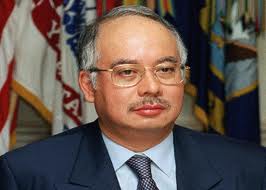
PM Najib Tun Razak launched New Economic Model
On March 30, 2010, Malaysian Prime Minister Najib Tun Razak announced the New Economic Model (NEM) with the objective of doubling the current per capita income of approximately US$7,000 to US$15,000 by 2020. The NEM is a package comprising of the 1Malaysia concept, the Economic Transformation Programme, the Government Transformation Programme and the 10th Malaysia Plan (10MP).
However, to be sustainable in the long run, the NEM initiatives need underpinning by a strong set of fundamentals embedded in knowledge — a solid mastery in science and technology, a penchant for innovation and a culture of doing well in Science and Mathematics among our pupils from an early age.
Progress lagging behind intentions
Despite our professed good intentions, the reality on the ground over the past few years has not been encouraging. Science is not a preferred discipline in our universities, one consequence of which is a low number of researchers, scientists and engineers in our country — 17.9 per 10,000 workers when the optimum number for a technologically advanced economy is four or five times as many.
Apart from not producing enough PhDs in the Natural Sciences, it doesn’t help that a significant number of Malaysians choose not to return home to work and serve their country upon graduation.
According to World Bank indicators, our output of scientific and technical articles in peer-reviewed journals — a key performance indicator of scientific advancement — remains low compared with those in the developed world or developing country giants such as Brazil, China or India.
Our national expenditure on R&D, less than one per cent of our gross domestic product, is also inadequate compared with technologically advanced countries, which typically spend between 2.5 and 3.3 per cent.
There is also big scope for our primary and secondary school students to improve in international Mathematics and Science, as assessed periodically by the Trends in International Mathematics and Science Study.
New initiatives provide hope for the future
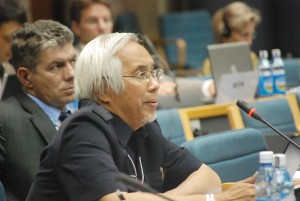
Dr. Zakri Abdul Hamid, Science Advisor to the Prime Minister Najib Tun Razak
Nevertheless, several recent developments give hope for optimism. For the 10MP, some RM700 million has been allocated to the Higher Education Ministry for fundamental research while the Science, Technology and Innovation Ministry remains the pivotal point of reference for all things science in this country, setting national priorities and directions.
Establishment of the National Science and Research Council (NSRC), meanwhile, is also expected to help reinvigorate the role of science in our development. The NSRC is already at work in several areas such as overseeing the formulation of a National Science Act, a National Science and Technology Policy, reviewing the roles and functions of the numerous Malaysian public research institutes and the role of the private sector in R&D.
 By: Maheen Hasan, Editor - Muslim-Science.Com
Muslim-Science.Com has the pleasure of presenting to you, the first ever List of ‘Top-20 Most Influential Women in Science in the Islamic World’. These are truly the unsung and little known heroines of the Islamic World whose contribution to the development of science and innovation of the Islamic World is no less than any others…
Our list encompasses 20 Remarkable Women who have performed amazing feats during the course of their careers. These pertain to all five main regions of the Islamic World, namely, South East Asia, South and Central Asia, Gulf and Persia, Maghreb and North Africa, and North Am...
By: Maheen Hasan, Editor - Muslim-Science.Com
Muslim-Science.Com has the pleasure of presenting to you, the first ever List of ‘Top-20 Most Influential Women in Science in the Islamic World’. These are truly the unsung and little known heroines of the Islamic World whose contribution to the development of science and innovation of the Islamic World is no less than any others…
Our list encompasses 20 Remarkable Women who have performed amazing feats during the course of their careers. These pertain to all five main regions of the Islamic World, namely, South East Asia, South and Central Asia, Gulf and Persia, Maghreb and North Africa, and North Am... The Islamic world’s current science effort is on life support and without major ‘surgery’ could be yet another policy failure, says Athar Osama.
In 2007, the Organisation of Islamic Cooperation (OIC) created the Science, Technology and Innovation Organisation (STIO) to jumpstart science cooperation among its 57 member countries. Three years later, a founding meeting approved an annual budget of US$70 million, with four founding members — Iran, Pakistan, Saudi Arabia and and Syria — committing US$5 million each to the budget.
To date, 20 countries have joined STIO — but none has honoured its financial commitment, according to the organisatio...
The Islamic world’s current science effort is on life support and without major ‘surgery’ could be yet another policy failure, says Athar Osama.
In 2007, the Organisation of Islamic Cooperation (OIC) created the Science, Technology and Innovation Organisation (STIO) to jumpstart science cooperation among its 57 member countries. Three years later, a founding meeting approved an annual budget of US$70 million, with four founding members — Iran, Pakistan, Saudi Arabia and and Syria — committing US$5 million each to the budget.
To date, 20 countries have joined STIO — but none has honoured its financial commitment, according to the organisatio... The number of female researchers in the Islamic World is above average, but this does not translate to the quality of their participation, says Athar Osama.
Women’s limited participation in the scientific labour force — particularly at the highest echelons — may be one of the most persistent and slow-moving demographic characteristics in the scientific world today. A report released last month by the US National Science Foundation suggests that women scientists are at the bottom of the salary ladder by the time they reach mid-career. [1]
Globally, the reasons for this lack of participation — such as sociocultural attitudes and the demands of a family �...
The Islamic world’s current science effort is on life support and without major ‘surgery’ could be yet another policy failure, says Athar Osama.
In 2007, the Organisation of Islamic Cooperation (OIC) created the Science, Technology and Innovation Organisation (STIO) to jumpstart science cooperation among its 57 member countries. Three years later, a founding meeting approved an annual budget of US$70 million, with four founding members — Iran, Pakistan, Saudi Arabia and and Syria — committing US$5 million each to the budget.
To date, 20 countries have joined STIO — but none has honoured its financial commitment, according to the organisatio...
The number of female researchers in the Islamic World is above average, but this does not translate to the quality of their participation, says Athar Osama.
Women’s limited participation in the scientific labour force — particularly at the highest echelons — may be one of the most persistent and slow-moving demographic characteristics in the scientific world today. A report released last month by the US National Science Foundation suggests that women scientists are at the bottom of the salary ladder by the time they reach mid-career. [1]
Globally, the reasons for this lack of participation — such as sociocultural attitudes and the demands of a family �...
The Islamic world’s current science effort is on life support and without major ‘surgery’ could be yet another policy failure, says Athar Osama.
In 2007, the Organisation of Islamic Cooperation (OIC) created the Science, Technology and Innovation Organisation (STIO) to jumpstart science cooperation among its 57 member countries. Three years later, a founding meeting approved an annual budget of US$70 million, with four founding members — Iran, Pakistan, Saudi Arabia and and Syria — committing US$5 million each to the budget.
To date, 20 countries have joined STIO — but none has honoured its financial commitment, according to the organisatio... By Zakri Abdul Hamid –
Science Adviser to the Prime Minister of Malaysia
For Malaysia, the past three decades have been a period of rapid and sustained growth. Measuring growth with the traditional Gross Domestic Product yardstick, Malaysia’s economy has increased more than a hundredfold. Over the past four decades, we have averaged nearly 7% annual growth. Poverty rates have fallen from 49%, to less than 4%. Per-capita GDP has risen from US$370, to more than US$9,000.
This growth has been matched by a fundamental change in the structure of our economy. Like many Asian countries, we have moved from a basis of agriculture and raw commodities to a multi-sector eco...
By Zakri Abdul Hamid –
Science Adviser to the Prime Minister of Malaysia
For Malaysia, the past three decades have been a period of rapid and sustained growth. Measuring growth with the traditional Gross Domestic Product yardstick, Malaysia’s economy has increased more than a hundredfold. Over the past four decades, we have averaged nearly 7% annual growth. Poverty rates have fallen from 49%, to less than 4%. Per-capita GDP has risen from US$370, to more than US$9,000.
This growth has been matched by a fundamental change in the structure of our economy. Like many Asian countries, we have moved from a basis of agriculture and raw commodities to a multi-sector eco... By: Dr. Athar Osama
Muslim-Science.Com met with Tan Sri Dr. Omar Abdur Rahman, Mahathir’s Science Advisor for over a decade and half and, the “prime mover” behind Mahathir Mohammed’s vision of a Knowledge-driven Malaysia. A deeply humble man, Tan Sri Omar insists that Mahathir was a science policymaker par excellence in his own right and that he would hardly have needed a science advisor. However, he played a critical role in providing scientific credibility to Mahathir’s plans and helping the Prime Minister reach out to the scientific community to build support for his policies.
As Malaysia’s first and longest serving Science Advisor – a position t...
By: Dr. Athar Osama
Muslim-Science.Com met with Tan Sri Dr. Omar Abdur Rahman, Mahathir’s Science Advisor for over a decade and half and, the “prime mover” behind Mahathir Mohammed’s vision of a Knowledge-driven Malaysia. A deeply humble man, Tan Sri Omar insists that Mahathir was a science policymaker par excellence in his own right and that he would hardly have needed a science advisor. However, he played a critical role in providing scientific credibility to Mahathir’s plans and helping the Prime Minister reach out to the scientific community to build support for his policies.
As Malaysia’s first and longest serving Science Advisor – a position t...