Formation of startups and new companies
Commercial exploitation of science, technology, and novelty
System of laws, regulations, strategies, and funding priorities
Discovery and creation of new knowledge of the natural world
Technological Advancements in the world.
Science Advisor and GSIAC Joint Secretary, Zakri Abdul Hamid
On May 17, 2011 the inaugural meeting of the Global Science and Innovation Advisory Council (GSIAC) for Malaysia was chaired by Prime Minister Najib Razak at the premises of the New York Academy of Sciences (NYAS).
A brainchild of the Prime Minister, the GSIAC was mooted arising from Malaysia’s positive experiences in utilizing expert advice from the private sector and academia to shape her socio-economic development plans. What is unique for the GSIAC is the depth and breadth of its membership which is both multidisciplinary and multisectoral in nature.
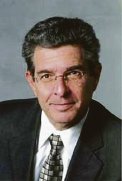
GSIAC Joint Secretary, NYAS President, Ellis Rubenstein
The council includes 25 renowned international figures of economics, business, science and technology volunteering to help Malaysians achieve an average income level of $15,000 in an environmentally-sustainable way helping, in other words, to light the nation’s path to a green, high-income economy.
A developed country is popularly considered to have an average national per capita income of $15,000 or more. Other definitions combine national income with additional measures such as life expectancy (in Malaysia’s case, 73.5 years) and education (literacy rate in Malaysia: 88.7% of its 28 million people). Regardless of the criteria used, fewer than 20% of the world’s 235 countries are deemed “developed.”
The Prime Minister says the Council’s advice and active partnership will help support the country’s pursuit of several strategic initiatives embodied in her “New Economic Model” to become a developed country by 2020.
 Feb 3 — Prof. Emeritus Dato’ Sri Dr. Zakri Abdul Hamid, the Science Advisor to the Prime Minister and Joint Chairman of the Malaysian Industry-Government Group on High Technology (MIGHT), was announced as one of the winners of the world’s most prestigious environment prize on February 1, 2014 in Dubai.
The Zayed International Prize for Environment was established in 1999 by Sheikh Mohammad Bin Rashid Al Maktoum, United Arab Emirates Vice President, Prime Minister and Ruler of Dubai. Named after a great statesman and a dedicated environmentalist, the Zayed International Prize for the Environment is meant to recognise and encourage environmental achievements...
Feb 3 — Prof. Emeritus Dato’ Sri Dr. Zakri Abdul Hamid, the Science Advisor to the Prime Minister and Joint Chairman of the Malaysian Industry-Government Group on High Technology (MIGHT), was announced as one of the winners of the world’s most prestigious environment prize on February 1, 2014 in Dubai.
The Zayed International Prize for Environment was established in 1999 by Sheikh Mohammad Bin Rashid Al Maktoum, United Arab Emirates Vice President, Prime Minister and Ruler of Dubai. Named after a great statesman and a dedicated environmentalist, the Zayed International Prize for the Environment is meant to recognise and encourage environmental achievements... By: Maheen Hasan, Editor - Muslim-Science.Com
Muslim-Science.Com has the pleasure of presenting to you, the first ever List of ‘Top-20 Most Influential Women in Science in the Islamic World’. These are truly the unsung and little known heroines of the Islamic World whose contribution to the development of science and innovation of the Islamic World is no less than any others…
Our list encompasses 20 Remarkable Women who have performed amazing feats during the course of their careers. These pertain to all five main regions of the Islamic World, namely, South East Asia, South and Central Asia, Gulf and Persia, Maghreb and North Africa, and North Am...
By: Maheen Hasan, Editor - Muslim-Science.Com
Muslim-Science.Com has the pleasure of presenting to you, the first ever List of ‘Top-20 Most Influential Women in Science in the Islamic World’. These are truly the unsung and little known heroines of the Islamic World whose contribution to the development of science and innovation of the Islamic World is no less than any others…
Our list encompasses 20 Remarkable Women who have performed amazing feats during the course of their careers. These pertain to all five main regions of the Islamic World, namely, South East Asia, South and Central Asia, Gulf and Persia, Maghreb and North Africa, and North Am... By the Editors of Muslim-Science.com
Human brains are hardwired to see patterns in things. This makes life easy for man as it allows him (or her) to conserve on processing power. Often these patterns manifest themselves in the form of stereotypes. Scientists are referred to as ‘nerds’, academics as ‘absent-minded’, and policy-makers as ‘wonks’. Our society and culture is full of stereotypes. A number of these stereotypes affect women in particular. Women are often portrayed or reflected as doing certain kinds of things and not others. For instance, they’re hardly portrayed as scientists. It is common to show them as dental hygienist but never as dentists...
By the Editors of Muslim-Science.com
Human brains are hardwired to see patterns in things. This makes life easy for man as it allows him (or her) to conserve on processing power. Often these patterns manifest themselves in the form of stereotypes. Scientists are referred to as ‘nerds’, academics as ‘absent-minded’, and policy-makers as ‘wonks’. Our society and culture is full of stereotypes. A number of these stereotypes affect women in particular. Women are often portrayed or reflected as doing certain kinds of things and not others. For instance, they’re hardly portrayed as scientists. It is common to show them as dental hygienist but never as dentists... The Islamic world’s current science effort is on life support and without major ‘surgery’ could be yet another policy failure, says Athar Osama.
In 2007, the Organisation of Islamic Cooperation (OIC) created the Science, Technology and Innovation Organisation (STIO) to jumpstart science cooperation among its 57 member countries. Three years later, a founding meeting approved an annual budget of US$70 million, with four founding members — Iran, Pakistan, Saudi Arabia and and Syria — committing US$5 million each to the budget.
To date, 20 countries have joined STIO — but none has honoured its financial commitment, according to the organisatio...
The Islamic world’s current science effort is on life support and without major ‘surgery’ could be yet another policy failure, says Athar Osama.
In 2007, the Organisation of Islamic Cooperation (OIC) created the Science, Technology and Innovation Organisation (STIO) to jumpstart science cooperation among its 57 member countries. Three years later, a founding meeting approved an annual budget of US$70 million, with four founding members — Iran, Pakistan, Saudi Arabia and and Syria — committing US$5 million each to the budget.
To date, 20 countries have joined STIO — but none has honoured its financial commitment, according to the organisatio... By Zakri Abdul Hamid –
Science Adviser to the Prime Minister of Malaysia
For Malaysia, the past three decades have been a period of rapid and sustained growth. Measuring growth with the traditional Gross Domestic Product yardstick, Malaysia’s economy has increased more than a hundredfold. Over the past four decades, we have averaged nearly 7% annual growth. Poverty rates have fallen from 49%, to less than 4%. Per-capita GDP has risen from US$370, to more than US$9,000.
This growth has been matched by a fundamental change in the structure of our economy. Like many Asian countries, we have moved from a basis of agriculture and raw commodities to a multi-sector eco...
By Zakri Abdul Hamid –
Science Adviser to the Prime Minister of Malaysia
For Malaysia, the past three decades have been a period of rapid and sustained growth. Measuring growth with the traditional Gross Domestic Product yardstick, Malaysia’s economy has increased more than a hundredfold. Over the past four decades, we have averaged nearly 7% annual growth. Poverty rates have fallen from 49%, to less than 4%. Per-capita GDP has risen from US$370, to more than US$9,000.
This growth has been matched by a fundamental change in the structure of our economy. Like many Asian countries, we have moved from a basis of agriculture and raw commodities to a multi-sector eco... By: Dr. Athar Osama
Muslim-Science.Com met with Tan Sri Dr. Omar Abdur Rahman, Mahathir’s Science Advisor for over a decade and half and, the “prime mover” behind Mahathir Mohammed’s vision of a Knowledge-driven Malaysia. A deeply humble man, Tan Sri Omar insists that Mahathir was a science policymaker par excellence in his own right and that he would hardly have needed a science advisor. However, he played a critical role in providing scientific credibility to Mahathir’s plans and helping the Prime Minister reach out to the scientific community to build support for his policies.
As Malaysia’s first and longest serving Science Advisor – a position t...
By: Dr. Athar Osama
Muslim-Science.Com met with Tan Sri Dr. Omar Abdur Rahman, Mahathir’s Science Advisor for over a decade and half and, the “prime mover” behind Mahathir Mohammed’s vision of a Knowledge-driven Malaysia. A deeply humble man, Tan Sri Omar insists that Mahathir was a science policymaker par excellence in his own right and that he would hardly have needed a science advisor. However, he played a critical role in providing scientific credibility to Mahathir’s plans and helping the Prime Minister reach out to the scientific community to build support for his policies.
As Malaysia’s first and longest serving Science Advisor – a position t...