Entrepreneurship

Formation of startups and new companies

Innovation

Commercial exploitation of science, technology, and novelty

Public Policy

System of laws, regulations, strategies, and funding priorities

Science

Discovery and creation of new knowledge of the natural world

Technology

Technological Advancements in the world.

Home » Archive by Category

New in Egypt

Perspectives: Building bridges—Towards a new science partnership between Europe and MENA

October 5, 2011 - 11:05 am | No Comment
By: Frank Lehner

Published in Journal of Renewable and Sustainable Energy on 30 August 2011.

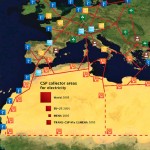
The idea of generating solar energy on a large scale in the sun-intensive countries of the Middle East and North Africa (MENA) to satisfy their own increasing energy demand and to export surplus energy to Europe as advocated in the DESERTEC concept1 has publicly received much attention in some countries, particularly in Germany, Morocco, Tunisia, and also substantial support from their governments. Besides the DESERTEC Foundation, an industrial consortium (Dii GmbH) was founded in 2009 which consists of major European and MENA companies to push this project further by working on legal, regulatory, technical, and economical frameworks to create viable market conditions for a large-scale roll-out. A systematic inter-connection around the Mediterranean basin and the deployment of 20 GW of renewable energy by 2020 is also at the core of the so-called Mediterranean Solar Plan,2 as part of a political roadmap based on a multi-governmental declaration by all 27 European Union Member States and 16 neighbouring states of the Union for the Mediterranean.
There are pressing challenges in MENA: The rapidly increasing energy (and water) demand in MENA will soon exceed the current supply capacities. It is expected that the electrical energy consumption in MENA will be more than triple by the year 2050 with respect to today.3 Water scarcity is already a serious problem in MENA, and population growth will further aggravate the situation. However, the potential of solar energy in MENA countries is immense with an annual average solar energy irradiance of 2400 kWh/m2. Every year up to 250 GWh of energy per square kilometre of desert could be harvested with solar power plants. This solar potential exceeds by far the potential of other renewable sources such as wind, biomass, hydro, or geothermal energy. Depending on the solar infrastructure, MENA would then be able to produce enough energy and co-generated water through seawater desalination for its own demands.

Recently in Egypt:

Egypt plans satellite and space agency launch
January 30, 2014 - 1:44 am | No Comment
Egypt plans satellite and space agency launch [CAIRO] Egypt plans to launch its second satellite for scientific research and establish a new space authority and national space agency as well as work with other African states to pave the way for a new African space agency. But some experts have warned that the aspirations may exceed Egypt’s financial and human resources, and that the country is rushing to launch a new satellite despite having learnt little from the loss of its first one in 2010 after just three years of operation. The planned satellite, called EgyptSat 2, will be manufactured, assembled and tested in Egypt, Mohamed Medhat Mokhtar, chair of the National Authority for Remote Sensing and Space Science...
Muslim-Science.Com’s List of Twenty Most Influential Women in Science in the Islamic World
January 13, 2014 - 6:51 am | No Comment
Muslim-Science.Com’s List of Twenty Most Influential Women in Science in the Islamic World By: Maheen Hasan, Editor - Muslim-Science.Com Muslim-Science.Com has the pleasure of presenting to you, the first ever List of ‘Top-20 Most Influential Women in Science in the Islamic World’. These are truly the unsung and little known heroines of the Islamic World whose contribution to the development of science and innovation of the Islamic World is no less than any others… Our list encompasses 20 Remarkable Women who have performed amazing feats during the course of their careers. These pertain to all five main regions of the Islamic World, namely, South East Asia, South and Central Asia, Gulf and Persia, Maghreb and North Africa, and North Am...
Mustafa’s Space Drive: An Egyptian student’s quantum physics invention
January 13, 2014 - 6:24 am | No Comment
Mustafa’s Space Drive: An Egyptian student’s quantum physics invention By Kit Eaton Remember the name, because you might see it again: Aisha Mustafa, a 19-year-old Egyptian physics student, patented a new type of propulsion system for spacecraft that uses cutting edge quantum physics instead of thrusters. First, a little background: One of the strange quantum facts at work in Mustafa’s engine idea is that there’s no such thing as a vacuum, devoid of particles, waves, and energy. Instead the universe’s supposedly empty spaces are filled with a roiling sea of particles and anti-particles that pop into existence, then annihilate each other in such a short space of time that you can’t readily detect them. Mustafa invente...
Scintillating Supersonic Scientists
January 13, 2014 - 5:34 am | No Comment
Scintillating Supersonic Scientists By the Editors of Muslim-Science.com Human brains are hardwired to see patterns in things. This makes life easy for man as it allows him (or her) to conserve on processing power. Often these patterns manifest themselves in the form of stereotypes. Scientists are referred to as ‘nerds’, academics as ‘absent-minded’, and policy-makers as ‘wonks’. Our society and culture is full of stereotypes. A number of these stereotypes affect women in particular. Women are often portrayed or reflected as doing certain kinds of things and not others. For instance, they’re hardly portrayed as scientists. It is common to show them as dental hygienist but never as dentists...

Previously in Egypt:

Royal Society Publishes Egypt’s Atlas of Science and Innovation Report | July 23, 2013 - 12:50 pm
Does the Arab world (not) need basic science? | May 23, 2013 - 1:36 pm
Islam Analysis: The ‘Women in Science’ Movement has a long way to go | March 23, 2013 - 12:59 pm
Growth of Science & Innovation in the Muslim World | August 8, 2012 - 1:26 am
SciDev.Net: Egypt’s Scientists Savour Post Revolution Year | January 26, 2012 - 6:26 am
Islam Analysis (14): Planting seeds for a scientific revolution | December 19, 2011 - 5:46 am
Islam Analysis (12): MENA Solar energy project must be more open | October 18, 2011 - 11:02 am